
WELCOME BONUS 300%
UP TO €2000 + 100
FREE SPINS
UP TO €2000 + 100
FREE SPINS
Home → Blackjack
Blackjack at Liraspin: Variants, Rules and Payouts
What doesn't count as Blackjack after Split?
The Blackjack Split / Double / H17 variant allows players to split their initial hand into up to four separate hands, effectively doubling the number of active bets on the table. This rule modifier improves the Return to Player by approximately 0.14 percentage points compared to games that prohibit doubling after a split occurs. Consequently, players who utilize this option reduce the house edge more significantly than those playing with restricted splitting rules.
Infinite Blackjack from Evolution permits unlimited seats at the table, allowing multiple players to benefit from liberal rules like resplitting Aces and doubling after splits. The game maintains a high RTP of 99.47 percent while offering side bets such as Any Pair and Hot 3 for additional wagering opportunities. This structure ensures that the mathematical advantage remains favorable for skilled players who adhere strictly to basic strategy throughout every round.
Quantum Blackjack Plus Live by Playtech introduces quantum multipliers up to 1,000x on three-card combinations totaling twenty-one points, adding volatility to the standard gameplay. While the base RTP stands at 99.57 percent with optimal strategy, these multipliers can drastically alter short-term payout expectations for individual sessions. Players must weigh these high-variance features against the consistent statistical return provided by traditional blackjack mechanics available in other variants.
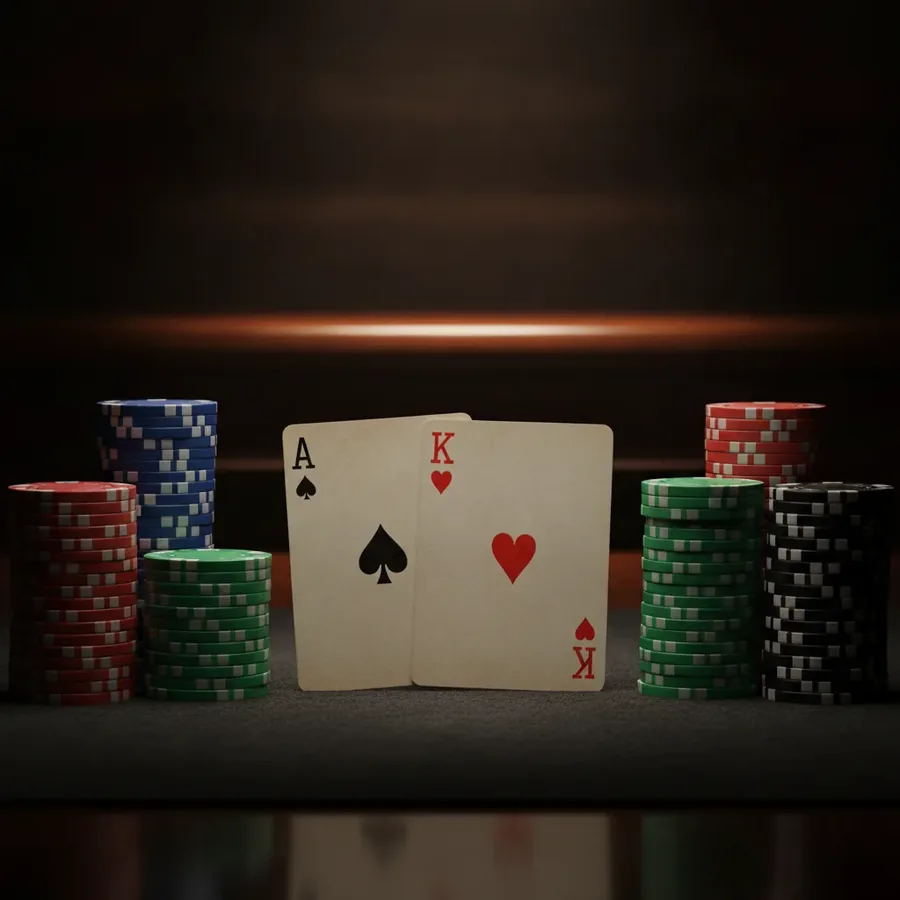
Continuous Shuffling Machine shuffles after each round
Infinite Blackjack by Evolution utilizes a Continuous Shuffling Machine to ensure that every hand is drawn from a freshly randomized shoe. This mechanical process eliminates the possibility of card counting strategies, as the composition of the remaining deck never stabilizes between deals. Players relying on pattern recognition cannot gain a statistical edge over the house in this specific live table environment.
The game offers an RTP of 99.47% with betting limits ranging from 1 to 5,000 EUR for unlimited seats at the virtual table. The constant reshuffling prevents any deviation from the theoretical return percentage, ensuring consistent variance regardless of previous outcomes. This feature guarantees that the stated house edge remains mathematically intact throughout the entire playing session without fluctuation.
Side bets such as Any Pair, 21+3, Hot 3, and Bust It are available alongside the main game but carry significantly higher house edges. These auxiliary wagers do not benefit from the same favorable conditions as the primary blackjack hands due to their distinct payout structures. Consequently, reliance on these side bets reduces the overall expected value for the player compared to standard strategic play.
Insurance Pays 2:1 Yet Still Costs Money
Blackjack Insurance is a side bet paying 2:1 when the dealer reveals an Ace, designed to hedge against the risk of a dealer blackjack. Despite the attractive 2:1 payout ratio, this wager carries a steep house edge of 7.47% across six to eight decks of cards. The mathematical disadvantage ensures that long-term profitability is virtually impossible for players who accept this offer routinely.
Basic strategy dictates that players must always decline insurance unless they possess a valid card counting system indicating a true count of +3 or higher. For a standard single-deck game, the house edge on insurance drops slightly to approximately 5.88%, yet it remains negative for the vast majority of participants. Accepting this bet converts a portion of the original stake into a separate, high-cost wager with poor expected returns.
The cost of insurance effectively increases the total amount of money at risk during a hand where the dealer might have an internal blackjack. A player wagering 100 EUR on the main hand who takes insurance risks an additional 50 EUR on the side proposition. This dual-exposure scenario demonstrates why the side bet is considered a financial drain rather than a protective measure for bankroll management.
Stand-on-17 Rule and Its Meaning for Players
The Stand-on-17 (S17) rule requires the dealer to stand on all seventeen totals, including soft seventeen, which is a favorable condition for the player. This rule contributes to lower house edges in games like Liberal Vegas Strip, where the combined effect with DAS and resplitting yields a 0.28% advantage for the casino. Adhering to S17 rules allows for more predictable outcomes when applying basic strategy charts to decision-making processes.
Conversely, the Hit-on-17 (H17) rule forces the dealer to draw another card on soft seventeen, increasing the house edge by 0.22 percentage points. Games utilizing H17 rules, such as those found in certain multi-deck variations, present a harder challenge for optimal play strategies. The difference between standing and hitting on soft seventeen directly impacts the frequency of dealer busts and subsequent player wins.
Quantum Blackjack Plus Live by Playtech operates under specific rules that maintain an RTP of 99.57% when played with optimal strategy despite quantum multipliers. The underlying base game rules likely favor the player through stand-on-17 mechanics, balancing out the volatility introduced by the random multipliers up to 1,000x. Understanding these rule variations is essential for calculating the true expected loss per hour of gameplay.
Players must adjust their basic strategy charts depending on whether the dealer stands or hits on soft seventeen to minimize the house advantage. Using incorrect strategy for the specific rule set can negate the benefits of favorable rules like S17 and increase the effective house edge. Precision in following the correct chart is mandatory to achieve the published RTP figures for any given blackjack variant.
How many decks are in the shoe?
Classic Blackjack often employs a single deck, which reduces the house edge by approximately 0.48 percentage points compared to eight-deck games. However, this benefit is frequently offset by less favorable rules, such as paying 6:5 for blackjack instead of the standard 3:2 payout. The single-deck format offers better odds only if the player encounters rare early surrender options or strict 3:2 payout structures.
Multi-deck games typically use six or eight decks, with the latter being the industry standard for most online and land-based casinos. Each additional deck increases the house edge slightly, pushing the advantage from roughly 0.15% in single-deck games to 0.46% or higher in complex variants. The probability of drawing specific cards changes marginally, affecting the effectiveness of card counting techniques over short sessions.
Blackjack Surrender variants may use multiple decks but offer late surrender rights, which improve the RTP by about 0.08 percentage points. Early surrender, though more valuable at up to -0.6 percentage points, is extremely rare and usually unavailable in standard online environments. The number of decks combined with surrender rules creates a unique mathematical profile that differs significantly from no-surrender games.
The Quantum Blackjack Plus Live table by Playtech uses a standard shoe configuration while integrating quantum multipliers for specific three-card combinations. The number of decks influences the base game variance, but the multipliers introduce additional randomness that overrides traditional deck penetration analysis. Players should focus on the stated 99.57% RTP rather than deck count when evaluating the long-term expectations of this hybrid game.
Blackjack variants at a glance
| Variant | Payout | House edge | Rule | Bet range |
|---|---|---|---|---|
| Blackjack Insurance / Versicherung (6–8 Decks) | 92.53% | 7.47% | Separate Nebenwette bis 50% der Hauptwette, wenn der Dealer ein Ass hat. Basisstrategie schreibt IMMER Ablehnung vor (außer Karten zählen bei True Count ≥ +3). Bei einem Deck Vorteil ≈ 5.88% | Insurance 2:1 |
| Blackjack Split / Double / H17 – Regel-Effekte | n.a. (Regel-Modifikatoren) | H17 +0.22 Prozentpunkte; RSA −0.08 Prozentpunkte; DAS −0.14 Prozentpunkte | Dealer Hits Soft 17 verschlechtert RTP um 0.22 Prozentpunkte; Resplit Aces verbessert um 0.08 Prozentpunkte; Double After Split verbessert um ca. 0.14 Prozentpunkte; 6 Decks statt 8 – ca. 0.02 Prozentpunkte. | Double – Einsatz ×2 mit einer Karte; Split – bis 4 Hände; Ass-Split meist mit einer Karte. |
| Blackjack 6 Decks, S17, DAS, DOA, Auszahlung 3:2, Basisstrategie | 99.54% | 0.46% | Dealer steht auf Soft 17; Verdopplung auf jeder Zweierkarte; Verdopplung nach Split erlaubt; keine Aufgabe. Basisstrategie ist für diesen Wert zwingend | Blackjack 3:2, normaler Gewinn 1:1, Insurance 2:1 |
| Blackjack Ein Deck, klassische Regeln, 3:2 | 99.85% | 0.15% | Weniger Decks = niedrigerer Vorteil; ein Deck gibt ca. −0.48 Prozentpunkte gegenüber 8 Decks. Oft durch 6:5 Auszahlung kompensiert. | Blackjack 3:2, Gewinn 1:1 |
| Blackjack Surrender (Late Surrender) – Regel-Effekt | n.a. (Regel-Modifikator) | −0.08 Prozentpunkte | Spieler gibt Hand nach Dealer-Blackjack-Prüfung auf, verliert die Hälfte des Einsatzes. Verbessert RTP um ca. 0.08 Prozentpunkte. Early Surrender ist wesentlich wertvoller (bis −0.6 Prozentpunkte), aber extrem selten. | Rückzahlung 50% des Einsatzes |
| Blackjack Auszahlung 6:5 statt 3:2 (6 Decks) | 98.15% | 1.85% | Ersatz von 3:2 durch 6:5 fügt exakt +1.39 Prozentpunkte zum Vorteil des Casinos hinzu – stärker als jede andere Regeländerung. Bei $10 Einsatz zahlt Blackjack $12 statt $15. | Blackjack 6:5, Gewinn 1:1 |
Which table limits suit 20 EUR balance?
Infinite Blackjack by Evolution accepts minimum bets starting at 1 EUR, making it highly accessible for players with a restricted 20 EUR bankroll. This low entry point allows for extended playtime and numerous hands before the balance is depleted, provided the player adheres to basic strategy. The upper limit of 5,000 EUR offers flexibility for larger stakes but remains irrelevant for small-balance testing scenarios.
Blackjack Party by Evolution sets a minimum bet of 1.00 EUR and a maximum of 1,000 EUR, providing a similar low-barrier entry for cautious players. The party atmosphere and two moderators create an engaging environment without altering the fundamental mathematical expectations of the game. A 20 EUR balance can sustain a reasonable number of rounds at the minimum stake level.
Quantum Blackjack Plus Live by Playtech also features a 1 EUR minimum bet, allowing users with limited funds to participate in the multiplier features. The potential for 1,000x multipliers on twenty-one combinations offers high-variance opportunities even with small initial wagers. However, the volatility associated with these multipliers requires careful bankroll management to withstand inevitable losing streaks.
Table games contribute only 10% toward bonus wagering requirements, meaning a 20 EUR balance generates minimal progress toward unlocking free spins or cash bonuses. Slots contribute 100%, so players seeking to clear the 300% welcome bonus up to 2,000 EUR should prioritize slot machines over blackjack tables. Playing blackjack with a small balance is suitable for entertainment but inefficient for meeting promotional turnover conditions.
Infinite Blackjack vs Classic Seven-Seat Table
Infinite Blackjack at Evolution accepts bets between 1 and 5,000 EUR for unlimited seats, while standard tables often restrict participation to seven players. The absence of a seat limit allows continuous action without waiting for an empty chair during peak hours. This structure supports higher volume play compared to fixed seating arrangements found in traditional casino environments.
Standard Seven-Seat tables typically enforce stricter betting caps per round to manage table turnover rates effectively. Infinite variants remove these physical constraints, enabling high rollers to wager the full 5,000 EUR limit simultaneously. The resulting flexibility significantly impacts session duration and potential total handle volume for dedicated players.
What doesn't count towards turnover at 10 percent?
Table games contribute exactly 10 percent toward the bonus wagering requirement, unlike slots which count fully. A 100 EUR bet on Infinite Blackjack adds only 10 EUR to the required turnover total. Players must wager significantly more on blackjack than on slot machines to clear the same bonus amount efficiently.
Which hands are excluded from Surrender?
Late Surrender rules apply only after the dealer checks for blackjack, excluding early surrender options entirely. Players cannot forfeit their hand if the dealer holds an Ace or Ten showing initially. This restriction limits strategic flexibility compared to rare early surrender variations that offer up to minus 0.6 percent house edge reduction.
Bonus 100 EUR with 10 percent credit
A 100 EUR deposit triggers a 300% welcome bonus totaling 2,000 EUR plus 100 free spins. Wagering table game contributions at 10 percent requires 40 times the bonus value for clearance. Calculating this means 2,000 EUR multiplied by 40 equals a total turnover requirement of 80,000 EUR through restricted game types.
Infinite Blackjack uses the Six Card Charlie
The Six Card Charlie rule pays automatically when a player draws six cards without busting. This specific side outcome improves overall return probabilities slightly beyond standard infinite deck mechanics. Evolution implements this feature alongside four distinct side bets including Any Pair and 21 Plus 3 for varied gameplay strategies.
Contact
Live - online chat
Banking









Providers












Liraspin 2026