
WELCOME BONUS 300%
UP TO €2000 + 100
FREE SPINS
UP TO €2000 + 100
FREE SPINS
Home → Roulette
Roulette at Liraspin
How Long a Session May Last
The Blaze Roulette table operated by Authentic Gaming defines its operational window as running from 19:00 to 01:00 CEST, which establishes a strict four-hour availability period for this specific live dealer variant. This limited schedule restricts player access to the evening hours only, meaning that sessions cannot extend into late night or early morning periods regardless of player preference or time zone adjustments. Consequently, users must plan their gaming activities within this defined timeframe to ensure uninterrupted play during the designated broadcast hours without encountering any service interruptions.
RTP percentages such as 97.30% for Quantum Roulette and European variants represent theoretical long-term averages calculated over hundreds of thousands of spins rather than short session outcomes. This mathematical reality implies that individual playing sessions will likely deviate significantly from these expected returns, creating variance that impacts bankroll management strategies during shorter gameplay periods. Players should recognize that volatility drives session length unpredictability, requiring careful stake sizing to withstand inevitable losing streaks while aiming for the stated house edge recovery over time.
Table games contribute only 10% toward wagering requirements for the 300% welcome bonus up to €2,000 plus 100 free spins, making extended play financially inefficient for clearing bonus funds quickly. This low contribution rate means players must wager substantially more total volume compared to slot contributions to meet the same turnover targets, effectively extending the duration needed to unlock withdrawable cash. Therefore, strategic session planning must account for this penalty factor when calculating the actual time investment required to convert promotional credits into real money winnings.
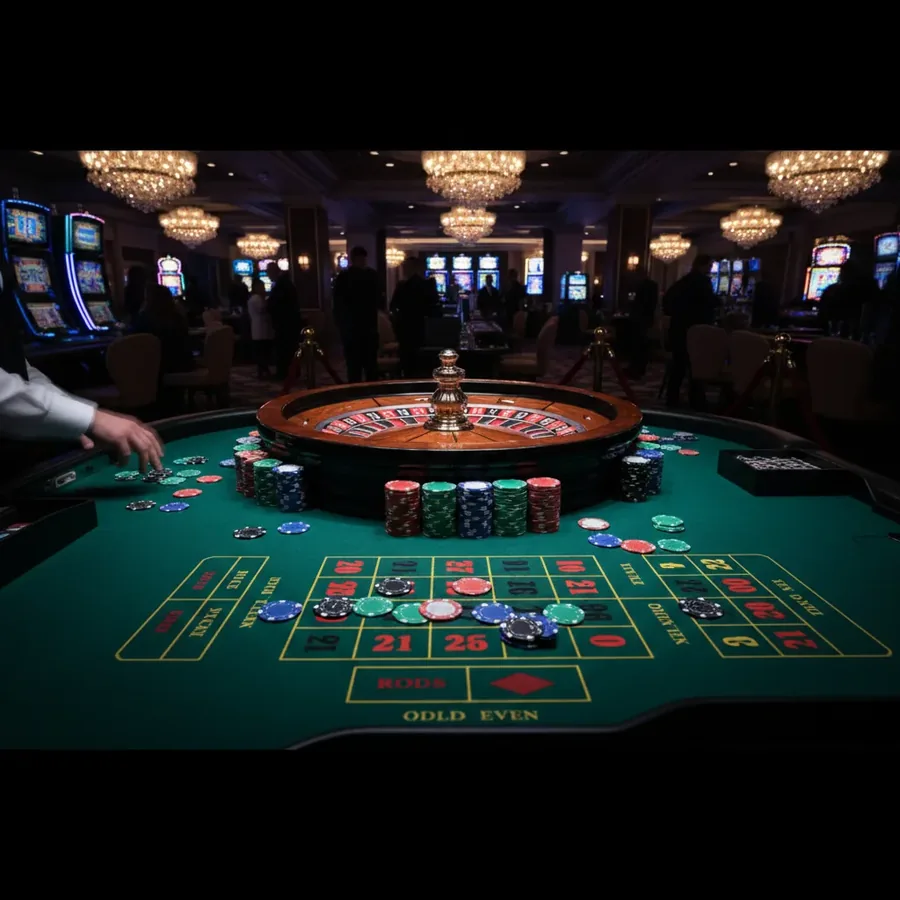
Dozen 2:1 and Columns Overview
Dozen bets paying 2:1 cover twelve numbers on the wheel, offering a probability of winning approximately 32.43% on European roulette with thirty-seven sectors and zero. This payout structure provides a balanced risk-reward profile compared to straight-up bets, allowing players to maintain bankroll stability while still achieving meaningful returns on successful wagers placed across the middle section of the layout. The consistent 2:1 ratio applies uniformly across all three dozen options regardless of specific number selection within each group.
Column bets also pay 2:1 and cover twelve numbers arranged vertically on the betting grid, providing an alternative coverage method identical in value but distinct in visual placement for user interface navigation. Both dozen and column wagers share the same mathematical expectation under standard European rules, resulting in an identical house edge of 2.70% when no special reduction rules apply to these outside positions. This symmetry ensures predictable loss rates across similar bet types despite different physical layouts on the digital table.
Quantum Roulette Live by Playtech modifies standard payouts through multipliers reaching up to 500x on selected numbers, potentially transforming a losing 2:1 dozen bet into a significant win if the multiplier lands on covered sectors. However, the base RTP remains at 97.30%, indicating that these random enhancements do not alter the fundamental long-term return expectations established by the underlying game mechanics. Players should understand that while multipliers create excitement, they operate independently of the standard 2:1 payout logic governing regular spin outcomes.
Straight 35:1 as Highest Single Payout
Straight bets paying 35:1 offer the highest possible single-number payout on the roulette table, covering exactly one sector out of thirty-seven available on the European wheel for a true odds ratio of 36:1. This discrepancy between payout and true odds generates the 2.70% house edge inherent to standard European roulette configurations without additional rule modifications affecting inner bet categories. The substantial reward potential attracts high-risk players seeking large wins from minimal stake investments during each spinning cycle.
Inner bets excluding La Partage benefits retain this 35:1 payout structure even in French Roulette variants, maintaining the standard 2.70% house edge despite the presence of favorable rules elsewhere on the table. This distinction highlights how specific rule applications like half-refund mechanisms only impact even-money outside bets, leaving straight-up wagers unaffected by protective measures designed to reduce volatility for conservative playing styles. Consequently, aggressive betting strategies relying on straight bets remain exposed to full statistical disadvantage throughout gameplay sessions.
Playtech Quantum Roulette limits maximum payouts for standard bets while introducing multipliers up to 500x on specific numbers, yet the base Straight 35:1 payout remains unchanged for non-multiplied results. This dual-payout system creates complex scenarios where a single spin can yield either standard returns or amplified winnings depending entirely on random quantum event triggers occurring during the deal phase. Understanding this mechanic is crucial for managing expectations regarding potential windfalls versus baseline losses on direct number predictions.
What Outside Bets with 1:1 Actually Pay
Red/Black bets paying 1:1 on French Roulette with La Partage refund fifty percent of the stake upon hitting zero, effectively reducing the house edge to 1.35% for these specific even-money positions. This rule modification significantly improves player expectancy compared to standard European roulette where the full stake is lost on zero, demonstrating how regulatory variations directly influence long-term profitability for conservative betting approaches. The partial refund mechanism acts as a buffer against the unavoidable statistical disadvantage present in all casino games.
Odd/Even and Low/High bets sharing the 1:1 payout structure benefit identically from La Partage rules, ensuring uniform treatment across all simple chance categories eligible for the half-refund provision on zero outcomes. This consistency allows players to distribute wagers across multiple 1:1 options without worrying about differential house edges compromising their overall strategy effectiveness during active playing sessions. The standardized application reinforces the mathematical predictability of these low-volatility betting patterns for disciplined gamblers.
American Roulette eliminates La Partage entirely, causing Red/Black bets paying 1:1 to face a substantially higher 5.26% house edge due to the additional double-zero sector increasing total outcomes to thirty-eight. This comparison illustrates why European and French variants are mathematically superior for players prioritizing longevity and reduced variance in their bankroll management strategies during extended gameplay periods. The absence of protective rules makes American wheels significantly less favorable for consistent long-term engagement despite identical nominal payout ratios.
Minimum and Maximum Bets Limit Every Martingale
Quantum Roulette Live sets minimum bets at 0.10 EUR and maximum limits at 5,000 EUR per spin, establishing a wide range that accommodates both casual players and high rollers seeking substantial exposure. These boundaries constrain aggressive progression systems like Martingale by preventing unlimited doubling after losses, as the table cap eventually halts further stake increases regardless of accumulated deficit size. Players employing such strategies must calculate maximum reachable stakes relative to starting amounts to avoid hitting limits prematurely during losing streaks.
Blaze Roulette by Authentic Gaming requires minimum stakes of 0.20 EUR with identical maximum limits of 5,000 EUR, creating slightly higher entry barriers compared to other live variants while maintaining comparable upper constraints. This structural similarity ensures that progressive betting methods face equivalent ceiling challenges across different providers, forcing players to adapt their bankroll allocation strategies based on individual table-specific parameters rather than assuming universal applicability. The fixed range necessitates precise calculation of safe doubling sequences before initiating any martingale-based approach.
The Five Number Bet on American Roulette paying 6:1 covers five sectors including zero and double-zero, representing the worst mathematical expectation at 7.89% house edge despite its attractive appearance. This specific wager lacks equivalents in European or French variants, highlighting how certain markets introduce uniquely unfavorable options that trap inexperienced players seeking broad coverage with minimal effort. Recognizing this anomaly prevents misguided attempts to apply standard progression logic to inherently flawed betting propositions found exclusively on double-zero wheels.
Roulette bet types at a glance
| Bet | Payout | Win Chance | Numbers Covered | House Edge |
|---|---|---|---|---|
| Roulette Amerikanisch (doppelte Null, 38 Sektoren) | Straight 35:1, Split 17:1, Street 11:1, Corner 8:1, Six Line 5:1, Dozen 2:1, Column 2:1, Rot/Schwarz 1:1 | 94.74% | 38 Sektoren (1–36 + 0 + 00); Auszahlungen wie beim europäischen Rad, aber der zusätzliche Sektor verdoppelt den Hausvorteil | 5.26% |
| Roulette Europäisch (einfache Null, 37 Sektoren) | Straight 35:1, Split 17:1, Street 11:1, Corner 8:1, Six Line 5:1, Dozen 2:1, Column 2:1, Rot/Schwarz 1:1, Odd/Even 1:1, 1-18/19-36 1:1 | 97.30% | 37 Sektoren (1–36 + 0); Auszahlungen wie für 36 Sektoren – daher konstanter Edge auf ALLE Wetten | 2.70% |
| Roulette Französisch, innere Einsätze (La Partage gilt nicht) | Straight 35:1, Split 17:1, Street 11:1, Corner 8:1, Six Line 5:1, Dozen 2:1, Column 2:1 | 97.30% | Rad gleich (37 Sektoren), aber La Partage/En Prison gilt nicht für innere Einsätze – Edge bleibt europäisch | 2.70% |
| Roulette Französisch mit La Partage (gerade Chancen) | Rot/Schwarz 1:1 (bei 0 Rückerstattung 50%), Odd/Even 1:1, Low/High 1:1; Innere Einsätze ohne La Partage: Straight 35:1, Split 17:1, Street 11:1, Corner 8:1 | 98.65% | Bei 0 wird die Hälfte des Einsatzes auf gerade Chancen zurückerstattet (Rot/Schwarz, Pair/Impair, Manque/Passe). En Prison gibt denselben 1,35%. Regel gilt NUR für gleiche Einsätze | 1.35% |
| Roulette Amerikanisch – Five Number Bet (0, 00, 1, 2, 3) | Five Number 6:1 (deckt 5 von 38 Sektoren) | 92.11% | Einzige Wette am amerikanischen Rad mit Edge über 5,26% – „Fallenwette“. Kein Äquivalent am europäischen Rad | 7.89% |
La Partage Halves Loss on Zero
The French Roulette variant featuring La Partage offers a theoretical return to player percentage of 98.65 percent, significantly higher than the standard European model's 97.30 percent due to specific rule adjustments applied to even money bets. This mathematical advantage arises because the house edge drops to just 1.35 percent when the ball lands on zero, effectively returning half of the wagered amount to the bettor rather than confiscating the entire stake. Consequently, players engaging in Red/Black or Odd/Even markets face a much lower long-term cost per spin compared to standard European roulette, preserving their bankroll over extended sessions.
Standard European Roulette maintains a constant house edge of 2.70 percent across all betting types, including Straight bets paying 35:1 and Dozen bets paying 2:1, because the single zero creates a fixed disadvantage on every possible outcome. The payout structure remains identical to the French version for most wagers, but the absence of the La Partage rule means the full bet is lost upon a zero result, increasing the expected loss rate by 1.35 percent. This structural difference highlights why the French variant is mathematically superior for players seeking to minimize variance while maintaining access to the same wide range of internal and external betting options available on the wheel.
When Does the Lock for Risk Bets Apply?
The American Roulette Five Number Bet covers sectors 0, 00, 1, 2, and 3 with a payout ratio of 6:1, resulting in a steep house edge of 7.89 percent and an RTP of only 92.11 percent. This specific wager is unique to the American wheel layout and represents the worst mathematical expectation available in any standard casino game, making it a critical trap for inexperienced players who might overlook its disproportionate disadvantage. The additional double zero sector expands the total field to 38 numbers, which directly doubles the house advantage compared to the European wheel while offering no corresponding increase in payout frequency for the covered combination.
Error: Planning for 500x Multiplier as Standard
Quantum Roulette Live by Playtech introduces random multipliers up to 500x on selected numbers, yet the base game retains a standard European house edge of 2.70 percent and an RTP of 97.30 percent despite these volatile features. The betting limits range from 0.10 EUR to 5,000 EUR, allowing high rollers to capitalize on multiplier events while low stakes players experience the same underlying probability distribution as traditional table games without the enhancement. This discrepancy between maximum potential payout and standard return rates demonstrates that the 500x feature is an occasional bonus mechanic rather than a consistent element of the core game mathematics, requiring careful bankroll management during non-multiplier rounds.
What Doesn't Count: Red and Black Simultaneously
Bonus turnover contribution for table games at Liraspin is capped at 10 percent, meaning that every 100 EUR wagered on Roulette only counts as 10 EUR toward the requirement attached to the 300 percent welcome bonus up to 2,000 EUR. This restrictive contribution rate significantly extends the time needed to clear the bonus funds compared to slot games, which typically contribute 100 percent, thereby increasing the exposure to the house edge during the wagering period. Players must therefore calculate their effective turnover requirements carefully, as the low contribution percentage effectively multiplies the actual volume of bets required to unlock withdrawable cash, impacting the overall value proposition of the promotional offer.
Corner 8:1 Covers Four Numbers
The Corner bet in European Roulette pays 8:1 and covers four adjacent numbers on the layout, offering a moderate risk-reward profile compared to straight bets that pay 35:1 but cover only a single number. With a house edge of 2.70 percent consistent across all internal wagers, this bet provides a balanced approach for players wishing to spread their capital across multiple outcomes while maintaining the standard European wheel advantages. Blaze Roulette by Authentic Gaming also supports this betting structure with limits from 0.20 EUR to 5,000 EUR, ensuring that players can utilize this specific coverage strategy within the live dealer environment without facing different payout terms.
La Partage Applies Only to Even Chances
The French Roulette variant with La Partage offers a superior 98.65% Return to Player for even money bets, significantly outperforming the standard European model's 97.30% RTP on identical wagers. This advantage stems from the rule that refunds fifty percent of the stake when the ball lands on zero, effectively halving the house edge for these specific outcomes compared to games lacking this protection mechanism. Players betting on Red/Black or Odd/Even benefit from this reduced risk profile, whereas straight bets retain the full 2.70% disadvantage without any partial recovery option available during zero spins.
Standard European Roulette operates with a fixed 2.70% house edge across all bet types because it lacks the La Partage or En Prison rules found in other variants. The Straight bet pays 35:1 while the Dozen bet pays 2:1, but neither receives any refund if the single zero sector hits, resulting in a consistent statistical loss rate regardless of the wager size chosen by the user. This structural difference means players cannot rely on partial returns to mitigate losses on inside bets, unlike the even chance strategies which actively reduce exposure to the house advantage through specific refund protocols.
American Roulette presents a steeper 5.26% house edge due to the addition of the double zero sector, bringing the total number of pockets to thirty-eight instead of the thirty-seven found in European wheels. This extra green pocket doubles the probability of losing even money bets compared to the European version, making the 1:1 payout on Red/Black statistically inferior to the French variant with its 1.35% edge. The Five Number Bet worsens this further with a 7.89% edge, demonstrating how wheel structure directly dictates the mathematical cost of playing each specific game type offered by the platform.
Small Budget: Why Straight 35:1 Empties Quickly
A minimum bet of 0.10 EUR on a Straight number in Quantum Roulette allows for extended play sessions, but the high volatility of single-number bets drains bankrolls rapidly despite the low entry threshold. With a 35:1 payout multiplier, a player must win frequently to maintain balance, yet the 2.70% house edge ensures that long-term expectations remain negative regardless of short-term winning streaks achieved through lucky spins. The table limits cap at 5,000 EUR, providing ample room for high rollers, but small budgets face significant variance risks when targeting the highest paying outcomes on the layout repeatedly over time.
Quantum Roulette introduces multipliers up to 500x on selected numbers, offering occasional massive payouts that can offset losses from frequent misses on Straight bets priced at 35:1. These random enhancements apply to the base game mechanics, potentially turning a standard loss into a significant gain if the quantum feature activates on the chosen sector during the spin cycle. However, relying on these random boosts creates unpredictable results, as the underlying 97.30% RTP remains constant, meaning the enhanced wins are statistically averaged out over hundreds of thousands of rounds played by users.
Blaze Roulette from Authentic Gaming restricts maximum payouts to 35:1 for Straight bets, ensuring consistency with traditional European Roulette mathematics while operating within a live dealer environment. The minimum stake of 0.20 EUR is slightly higher than the digital Quantum version, requiring a larger initial commitment per spin to achieve similar session lengths for budget-conscious players. Host availability from 19:00 to 01:00 CEST adds a temporal constraint, limiting when players can access this specific live stream and potentially forcing them to switch tables or wait during off-peak hours.
House Edge: What 2.70 Percent Actually Costs
The 2.70% house edge in European Roulette translates to an expected loss of 2.70 EUR for every 100 EUR wagered on inside bets like the Straight or Split options over the long term. This mathematical reality holds true across all bet types, including Dozen and Column bets paying 2:1, as the single zero pocket ensures the casino retains this percentage of total handle regardless of the specific wager placement chosen by participants. Understanding this cost helps players manage expectations, recognizing that no betting system can overcome the inherent statistical disadvantage built into the wheel's design and payout structure for all possible outcomes.
In contrast, the American Roulette variant imposes a 5.26% house edge due to the presence of both single and double zero pockets, nearly doubling the theoretical cost of play compared to its European counterpart. This increased edge applies uniformly to all bets, meaning a 100 EUR wagering volume yields only 94.74 EUR in expected returns, significantly lower than the 97.30 EUR returned by European wheels. Players choosing American Roulette accept a higher price for the same entertainment value, as the additional green sector mathematically guarantees a faster depletion of funds compared to games with fewer losing pockets.
The Five Number Bet in American Roulette carries a prohibitive 7.89% house edge, making it the most expensive option on the table by a wide margin compared to standard wagers. Covering five sectors (0, 00, 1, 2, 3) for a 6:1 payout seems attractive, but the statistical disadvantage is so severe that it drastically reduces the overall return to player for anyone utilizing this specific combination. Avoiding this trap is crucial for preserving bankroll, as even a small allocation of funds to this bet drags down the average performance of the entire session more than any other single wager available.
Table games contribute only 10% toward the wagering requirement for the 300% welcome bonus, meaning players must wager ten times more on roulette to clear bonus funds compared to slots. A 2,000 EUR bonus requires 80,000 EUR in turnover, but since roulette counts at 10%, players actually need to place 800,000 EUR in bets to meet the condition, exponentially increasing the impact of the 2.70% house edge on their real money balance. This contribution rate makes clearing bonuses via roulette highly inefficient, as the cumulative cost of meeting the turnover target often exceeds the bonus value itself through inevitable losses incurred during play.
What Doesn't Count as Loss Protection with Zéro?
Inside bets in French Roulette, such as Straight or Split wagers, do not qualify for La Partage or En Prison rules, leaving them fully exposed to the house edge when zero appears. Unlike even money bets where fifty percent is returned, a losing Straight bet on zero results in the complete forfeiture of the stake, maintaining the standard 35:1 payout structure without any mitigation for the zero outcome. This distinction is critical for players who assume all bets benefit from the favorable French rules, as the protection mechanisms are strictly limited to external wagers placed on Red/Black or Odd/Even sectors.
The En Prison rule, which shares the same 1.35% house edge benefit as La Partage for even chances, also excludes all inside bets from its protective scope during zero spins. When zero hits, a Split bet loses entirely rather than being imprisoned for the next round, contrasting sharply with Column bets that might have their stake held for recovery. This limitation ensures that high-risk, high-reward strategies targeting specific numbers carry greater financial danger in French Roulette than in variants where broader rule sets apply to different sections of the betting table layout.
American Roulette completely lacks La Partage and En Prison rules, meaning zero results in the immediate loss of all stakes regardless of bet type, including even money options. The 5.26% house edge reflects this absence of protection, as players receive no partial refunds or imprisonment benefits when the ball lands on either zero pocket during gameplay. This structural difference makes American Roulette significantly more costly for players seeking some form of loss mitigation, as every bet type suffers the maximum statistical penalty without any special provisions to soften the blow of hitting the green sectors.
Only 10 Percent Contribution: What are the Consequences?
The 10% contribution rate for table games means that every 100 EUR wagered on French Roulette only counts as 10 EUR toward the wagering requirement for the 300% welcome bonus up to 2,000 EUR. To clear a 2,000 EUR bonus, players must generate 80,000 EUR in actual turnover, a volume that exposes their bankroll to the 2.70% house edge over hundreds of thousands of spins. This requirement makes using roulette to clear bonuses financially inefficient, as the cumulative losses incurred during play often surpass the initial bonus amount before the turnover target is successfully reached.
Comparing this to slot machines, which typically contribute 100%, reveals a significant disparity in bonus clearance efficiency, as slots allow players to meet requirements with ten times less actual wagering volume. A player betting 100 EUR on slots sees the full amount count toward turnover, whereas the same bet on Blaze Roulette or Quantum Roulette contributes only a fraction, drastically extending the time and money needed to unlock withdrawable funds. This structural disadvantage encourages players to favor slots for bonus hunting, reserving roulette for pure entertainment without the expectation of efficiently converting bonus credits into cash.
The maximum bonus of 2,000 EUR combined with the 10% table game contribution creates a substantial barrier for players wishing to use roulette extensively during the wagering phase. Reaching the necessary 80,000 EUR turnover on a game with a 2.70% edge theoretically costs players approximately 2,160 EUR in expected losses, exceeding the bonus value itself. Consequently, attempting to clear the bonus primarily through French or American Roulette variants is mathematically unsound, as the combination of low contribution rates and inherent house edges guarantees a net negative outcome for the majority of participants.
Contact
Live - online chat
Banking









Providers












Liraspin 2026